
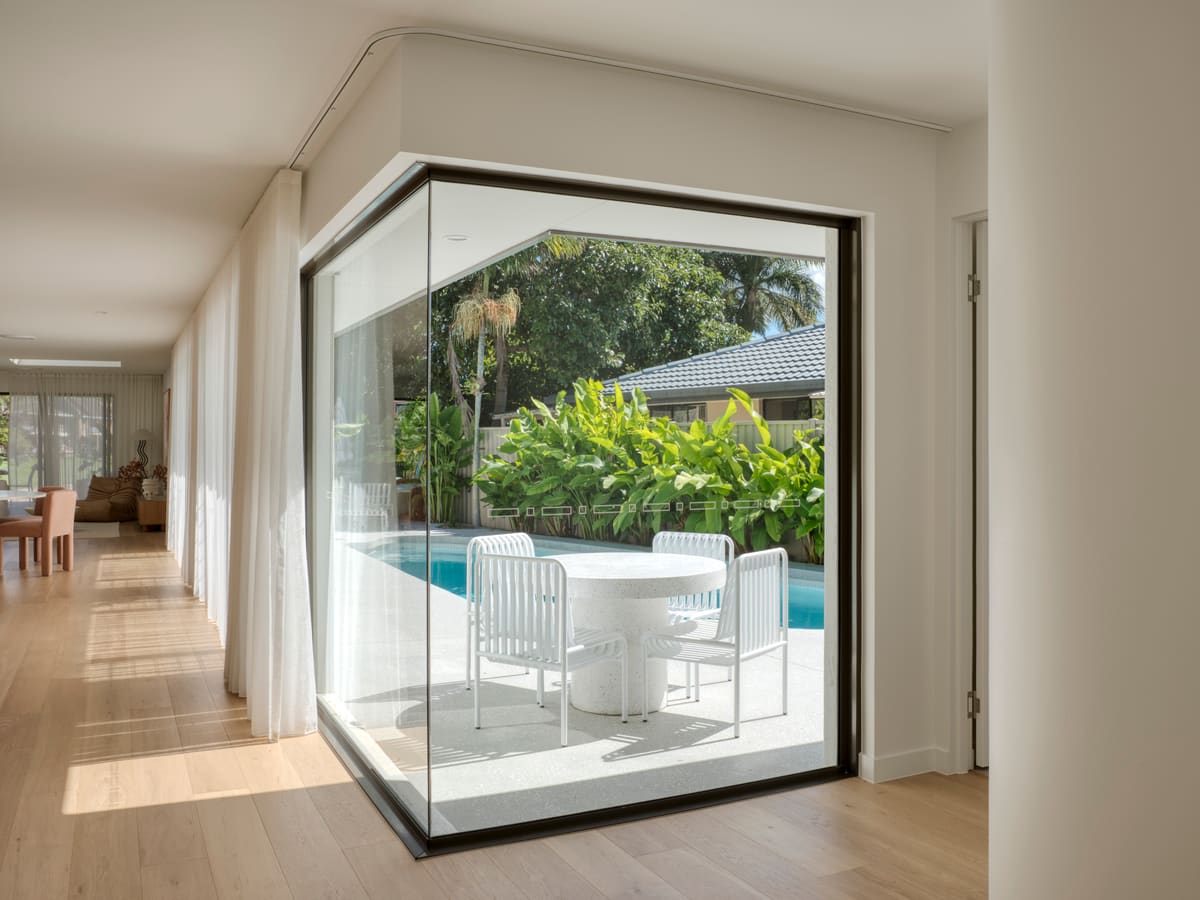
A property can look immaculate at an open home and still be carrying a major defect or a genuine safety hazard, because almost nothing that matters to a building and pest inspection is visible on a walkthrough. Across 50 of our own recent Gold Coast, Brisbane fringe and Northern NSW inspections, 78% of properties had at least one major defect and 82% had at least one serious safety hazard — and in our experience, how the property presented told buyers almost nothing about which ones would. "It looked fine" is not evidence of anything. It is usually said with complete confidence about the one part of the property nobody actually checked.
Why a walkthrough tells you almost nothing
An open home shows you finished surfaces — paint, tiles, carpet, staging. A building and pest inspection looks at what a walkthrough skips entirely: the subfloor space, the roof space, the balcony belonging to the unit above yours, the fence line at the back of the block — the reasonably accessible areas of the property where the evidence actually is. It also picks up on indicators a walkthrough never checks for at surface level — a moisture meter reading, staining, or swollen skirting — that point to a problem behind a wall or under a floor covering, even though the concealed space itself can't be opened up and inspected directly. None of that is visible on a walkthrough, and none of it is optional to check. A visual inspection to AS 4349.1 and AS 4349.3 focuses on the reasonably accessible areas of a property precisely because that is where the evidence actually is. Surface appearance is not part of the test.
The leak that shows up somewhere else entirely
In our own unit and apartment inspections, wet-area defects are the most common finding, and balcony defects are a close second — and balconies leak downward, not into themselves. Elevated moisture readings and bubbling paint on a balcony ceiling almost always mean water getting into the unit above, not a problem with the balcony a buyer is standing on. Someone touring an open home looks at the balcony in front of them. Almost nobody thinks to look up at the ceiling above it, or to ask who is above them at all.
We cover this pattern in more detail in our guide to balcony and balustrade defects in walk-up apartment blocks.
The termite activity that starts in the yard, not the house
Across the same 50 inspections, active termites or termite damage were confirmed in 12 properties — 24% — and 11 of those 12 were older, standalone houses. The pattern is consistent: it starts outside the walls, in a tree stump, a boundary fence or garden timber close to the house, well before it reaches the structure itself. A tidy front garden and a freshly painted fence tell a buyer nothing about what is happening underneath either one. A property can present beautifully and still have active termite workings a few metres from the front door.
For the visual signs worth learning to check yourself, see our article on what termite damage actually looks like.
The safety hazard that is easy to miss until it is pointed out
Loose balustrade posts, inadequate handrails on elevated decks and stairs, and electrical items outside a safe condition are recurring findings in our own inspections — genuine safety hazards, not cosmetic notes — and any one of them can sit on a property that otherwise looks immaculate. A balustrade can look perfectly solid and still move under load; that is not something a buyer can tell by looking, only by testing it against a structured checklist. Where an external timber structure such as a deck, balcony or set of stairs is involved, we recommend further assessment by a suitably licensed structural engineer, and caution against loading the structure further until it has been assessed. The finding is what determines the next step — not how the structure looks.
Our article on deck, patio and external stair defects covers those balustrade, handrail and post findings in detail.
A written report, not a walkthrough impression
This is really the difference a building and pest inspection makes: it replaces an impression with a written record. Every job runs on a signed pre-inspection agreement, and the inspection itself is carried out generally in accordance with AS 4349.1 and AS 4349.3, covering the reasonably accessible areas of the building and site — subfloor, roof space, wet areas, external timber structures, site drainage — with the findings set out in a same-day written report, not a verbal impression formed walking through the front door. Where a condition conducive to timber pest activity or structural damage is observed, the report says so and recommends the right specialist, rather than leaving it to guesswork. That report is the actual product. What it says about a property that "looked fine" is very often a different story to the one the presentation told.
Our guide to choosing a building and pest inspector covers what to check before you book one, and the FAQs cover more on process, cost and what happens once a finding is reported.
To arrange a combined building and pest inspection, call 0431 114 815. The fixed price is confirmed before you book, and the written report is with you the same day.