
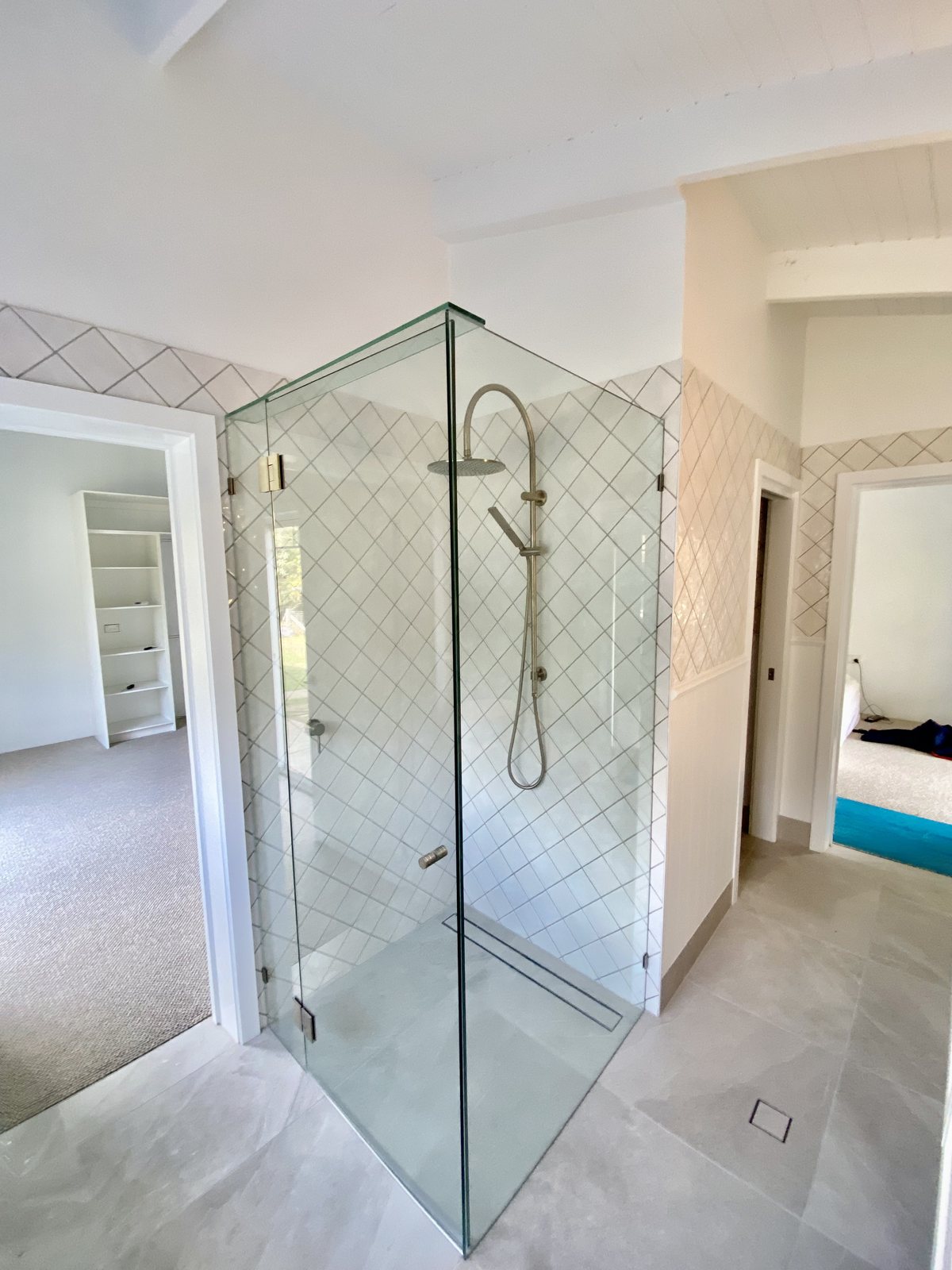
In our own pre-purchase inspections of Gold Coast units and apartments, wet areas are the single most common defect finding — ahead of balconies, balustrades and anything on the timber pest side. Three findings come up more than any others: perished or missing shower sealant (silicone) and grout, a shower screen that lets water out at its edges, and a shower that drains slowly enough to overflow the water stop onto the bathroom floor. None looks dramatic. Each lets water past the tiled surface into the wall and floor behind it, where persistent moisture is a condition conducive to structural damage and timber pest infestation.
Why is the shower the most common finding in a unit?
A shower is deliberately soaked every day, often for decades — and the parts that keep that water where it belongs are not the parts most people think. The tiles and grout are not the water barrier. Cement grout is porous, and the sealant joints at the floor-to-wall junction, in the corners and around the screen are movement joints that are expected to be renewed over the life of the bathroom. The actual barrier is the waterproofing membrane beneath the tiles, and it is concealed, so a visual inspection can never state its condition. What can be observed is everything in front of it: sealant that has cracked, shrunk or come away, grout that is missing or powdery, and elevated moisture readings on the far side of the wall where water has already got past the finishes.
Units make this worse. Much of the Gold Coast's walk-up stock dates from the 1970s to the 90s with original bathrooms, so the sealant and grout have had a long time to weather. And a unit usually has no subfloor or roof space, so the wet area is one of the few places inside the lot where moisture-related problems can be observed directly.
The three shower findings we record most
| Finding | What it looks like | Why it matters |
|---|---|---|
| Perished sealant and grout | Cracked, shrunken, blackened or missing silicone at the floor-to-wall junction, in the corners, around the tap set and along the base of the screen. Grout that is missing or crumbles to the touch. | Water gets past the tile surface into the substrate on every use — and it is the finding most often walked past, because it looks like housekeeping. |
| Shower screen leaking at its edges | Water escaping at the wall channel, the hinge side, the door sweep or the floor junction, so the floor outside the screen is wet after every shower. Often paired with swelling at the bottom of the vanity or the door jamb beside the shower. | The water lands on a vanity kickboard and door frame never meant to be wet every day; swelling and elevated moisture readings follow. |
| Slow-draining shower overflowing the water stop | Water ponds while the shower is running and rises over the water stop — the raised threshold or hob at the shower entry that keeps water inside — then spreads across the bathroom floor. | Buyers hear "slow drain" and think plumbing. It is also a moisture finding: every shower sends water across the floor. The cause is for a suitably licensed plumber or builder to assess. |
Where does a shower leak actually show up?
Almost never in the shower — the finishes are the last thing to show it. In practice a shower leak shows up as swollen or lifting skirting in the bedroom or hallway on the other side of the wall, a musty smell in that room, paint bubbling at the base of the wall, flooring that has lifted just outside the bathroom door, or a stain on the ceiling of the room below. In a unit, that room below is often someone else's lot — and the reverse is just as common: bubbling paint on your bathroom ceiling is usually coming from the shower of the unit above, not from anything inside your own lot.
This is why non-invasive moisture readings are taken on the shower walls, on their far side in the adjoining room, along the base of the walls, under the vanity and on any ceiling within the lot that sits below a wet area. A reading higher than the surrounding material is located, photographed and recorded as observed — an indicator at the accessible surface, not a view inside the wall. Our page on how we use a moisture meter explains what the readings can and cannot tell you.
The other item under the sink: flexible hoses
The wet-area finding that has nothing to do with the shower is the braided flexible hose under a sink or vanity. These hoses sit under constant mains pressure, and in unit after unit we find them with rust or corrosion showing through the braid, kinked hard against the cabinet wall, or bulging. A burst flexible hose is one of the most common causes of water damage inside a home — and in a unit, that water goes into the lot below as well as your own. It is not a lifetime fitting, and its installation date is rarely known in a unit you are buying. Where its visible condition is deteriorated, the report records it and recommends replacement by a suitably licensed plumber.
What the inspection checks in a unit wet area
Inside the lot, every wet area — bathroom, ensuite and laundry — is assessed for the following, to the extent it is readily accessible at the time of inspection:
- Sealant and grout at the floor-to-wall junction, in the corners, around tapware and along the base and edges of the shower screen
- The shower screen — its seals, sweep and wall channel, and whether water escapes past it when the shower is run
- The floor waste — fixtures are operated, and whether water clears the waste or ponds toward the water stop is recorded
- Non-invasive moisture readings on the shower walls, their far side in the adjoining rooms, the base of walls and under the vanity
- The visible condition of flexible hoses and waste connections under sinks, vanities and the laundry tub
- Wet-area ceilings for staining, bubbling paint or moisture readings that point to the lot above
What it cannot do is see the waterproofing membrane, the framing or the pipework inside the wall — those are concealed, and the written report says so. Older walk-up blocks show this pattern most consistently in our experience — see our Southport suburb page, where original wet areas and ageing flexible hoses are a standing part of what we look at inside the lot.
What happens if the report flags a wet-area defect
A wet-area finding is recorded with photographs and its location, and classified as a minor defect, a major defect or a serious safety hazard depending on what was observed. Perished sealant and grout on their own are usually maintenance items. Where elevated moisture was recorded, the report describes it as a condition conducive to structural damage and timber pest infestation and recommends further investigation by a suitably licensed and insured plumber or waterproofing contractor, and by a timber pest inspector where the moisture is in or against timber framing. We do not estimate repair costs or timeframes — that is for the licensed trade carrying out the further assessment.
In a strata unit, whether wet-area waterproofing is the lot owner's responsibility or the body corporate's depends on the scheme and the lot boundary — worth confirming with your conveyancer before deciding on the findings. None of this is a reason to walk away from a unit. Most wet-area findings are practical, budgetable items once they are in writing — the point is that you know about them before settlement, not after the first stain appears on a neighbour's ceiling.
Balconies are the second most common finding in the same inspections — see our article on balcony and balustrade defects in walk-up apartments. For why wet-area moisture matters on the timber pest side, particularly on the lower floors of a block, see why ground-floor units face higher termite risk than you'd think. Our unit and apartment inspections page and the FAQs cover what is and is not inspected in a strata lot.
To arrange a combined building and pest inspection for a unit or apartment, call 0431 114 815 — QBCC licence 1519 2537. The fixed price is confirmed before you book, and the written report is with you the same day.