
Most homeowners assume termite activity slows down over winter. On the Gold Coast, it doesn't. Our subtropical climate keeps termites active all year round — they simply work less visibly, deeper in the nest and closer to reliable moisture and warmth. That behaviour is exactly what makes winter a smart time to book a timber pest inspection.
Termites concentrate where we can find them
In the cooler months, termite colonies tend to concentrate activity around warm, moist, protected areas — subfloors, hot water systems, wet areas and the soil against slab edges. Because activity is more concentrated, the conditions that support it are often easier to observe during a visual inspection of the reasonably accessible areas.
Thermal imaging works harder in winter
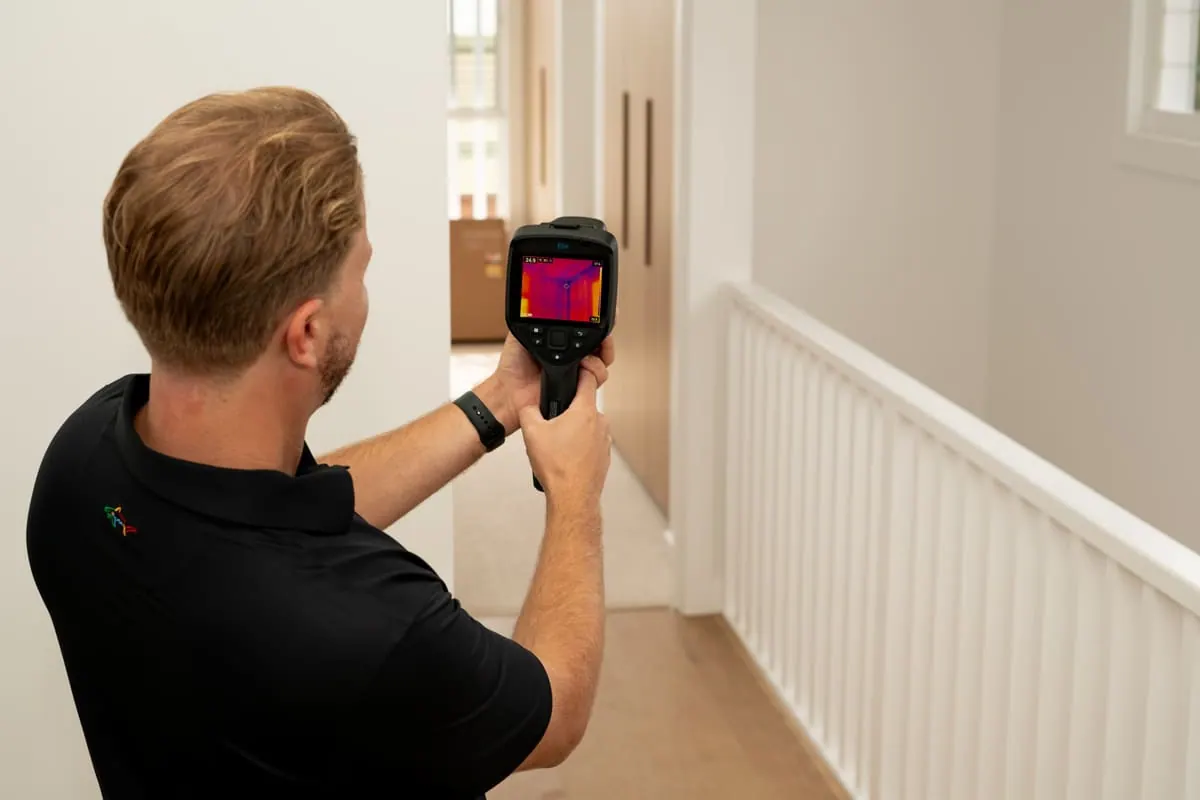
The temperature difference between a warm, active area behind a wall and the cooler surrounding structure is greater in winter. Tools like our FLIR thermal imaging camera and moisture meter assist the visual inspection by highlighting temperature and moisture anomalies that may warrant closer attention — anomalies that stand out more clearly against a cool background.
Beat the spring rush
Spring is peak season for termite swarms and for inspections. Booking in winter means findings land before the high-risk season, giving you time to act on the report — whether that means a pest management proposal, fixing drainage, or simply clearing stored timber away from the house.
Across 68 of our own combined building and pest inspections, confirmed termite activity or damage turned up in 16 properties — about 24% — and the pattern was consistent: activity typically started outside the walls, in a tree stump, a boundary fence or garden timber close to the house, well before it reached the structure. A winter inspection, with activity more concentrated around warmth and moisture, is well placed to pick up exactly that kind of early, external evidence before it moves further in.
A timber pest inspection in accordance with AS 4349.3 covers evidence of termites, borers and fungal decay in the reasonably accessible areas, plus the conducive conditions that attract them. The findings are delivered in a written report, with photos, the same day.
For more on termite risk on the Gold Coast, see our guide to why ground-floor units face higher termite risk and five practical ways to reduce termite risk. Our FAQs cover common questions on timing, scope and the report.
What does a winter termite inspection actually record?
On most properties we inspect, the timber pest section of the report records no live termites. What fills it is conducive conditions and limitations: the circumstances that attract termites, and the areas that could not be seen on the day. Those decide what you do next, and the same items come up in winter as in any other month:
- No durable notice visible near the meter box or subfloor access, so a termite management system cannot be confirmed on site: a question for the vendor, or for the body corporate in a unit.
- Elevated moisture to a wet area or a damp subfloor, a condition conducive to structural damage and timber pest infestation, with further investigation by a suitably licensed and insured plumber or waterproofing trade recommended.
- Timber in contact with soil close to the building, such as garden edging, fence posts or a stump, recorded as a conducive condition whether or not activity is present.
- No roof space in many apartments, because floors and roof are concrete, so the report records a higher risk of undetected activity in the concealed structure above the ceiling.
For where activity tends to show up first, read when termite risk peaks on the Gold Coast and what to check in the yard.
Is a clear winter termite result still valid by summer?
No. A timber pest inspection is a record of one day, not a forecast. A report that found no evidence of termites describes the time of inspection and the areas reasonably accessible that day. Conditions move: a garden bed is built up against an external wall, a shower seal perishes and feeds moisture into the framing behind it, a tree is cut and the stump is left beside the slab. None of that appears in last winter's report.
That is the honest case for an annual check. In our own inspections, live activity or damage has shown up overwhelmingly in standalone houses, mostly established ones, but conducive conditions turn up in units and newer homes too, and those change between one winter and the next. The useful habit is a yearly building and pest inspection booked each winter, so each report shows what has changed since the last one.
If a termite management system has been installed since the last inspection and a durable notice fitted, the next report records it. If a condition noted last time, such as a damp subfloor or a garden bed built up over the slab edge, has not been dealt with, it is recorded again, which tells an owner what to fix first.
To book a timber pest inspection as part of a combined building and pest inspection, call 0431 114 815. The fixed price is confirmed before you book.
Book a Gold Coast building and pest inspection with CYTE before you commit, and read the findings in a written report the same day.