
Every established home has defects. The question a pre-purchase building inspection answers is not whether a property has faults — they all do — but which faults matter. In Australia, building inspectors work to an Australian Standard, AS 4349.1, which sets out how to separate a minor defect from a major one. This guide explains those categories in plain English and what each one means for you as a buyer.
What the Australian Standards are
A building and pest inspection in Australia is carried out to a set of national documents published by Standards Australia, the country’s peak standards body. They are written by technical committees and set the agreed minimum benchmark a professional inspection must meet. Three parts of the AS 4349 series apply to a pre-purchase inspection:
- AS 4349.0 — General requirements: the shared framework for all building inspections.
- AS 4349.1—2007 — Pre-purchase inspections, Residential buildings: the building inspection itself.
- AS 4349.3—2010 — Timber pest inspections: termites, borers and timber decay.
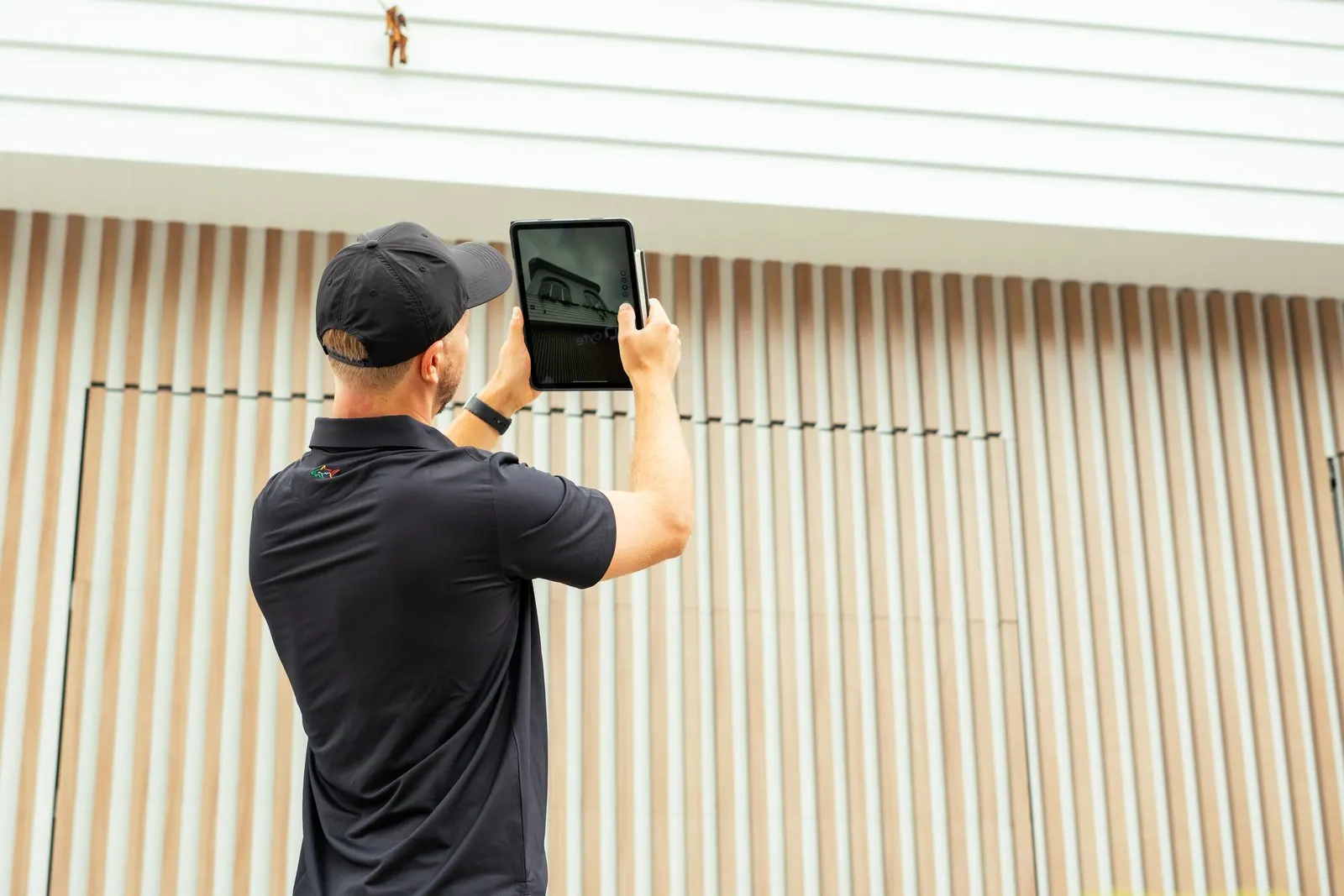
AS 4349.1 sets the minimum benchmark a professional pre-purchase inspection must meet — the floor, not the ceiling. A good inspector does more, never less (our guide on how to choose a building and pest inspector covers what to look for). In practice, an inspection carried out to the Standard means a thorough visual examination of the reasonably accessible areas, reporting the property’s condition at the time of inspection. It does not open up walls, dismantle fixtures or take the building apart.
How the Standard defines a defect
Before it separates minor from major, AS 4349.1 works from a simple starting point: a defect is any fault or departure from the condition a material, assembly or component is intended to be in. Every home accumulates these over its life. The inspector’s job is to record them and, critically, to sort them into two categories.
Minor defects
The category is broad by design: a minor defect is any defect that doesn’t meet the threshold for a major one (see below). In plain terms, these are the routine faults every established property carries — and on their own, none is cause for alarm:
- Hairline cracking in internal plasterboard linings and cornices (cracking to masonry, a concrete slab or a load-bearing wall is a different matter — see below)
- Doors and windows that stick or need adjustment
- Weathered sealant and perished rubber seals
- Corroded fittings, hinges and fixings
- Blemished, chipped or worn finishes
These are worth recording, and a thorough report does record them — but they are maintenance items, not red flags. A long list of minor defects is completely normal, even for a well-kept home. It is a sign of a careful inspection, not a problem property.
Major defects
This is the category that changes a decision. AS 4349.1 treats a defect as major when it is significant enough that rectification is needed to avoid an unsafe condition, a loss of utility, or further deterioration of the property. Unpack those three triggers and you have the whole test:
- Unsafe conditions — the fault could put people at risk, such as a failing balustrade or an unstable structure.
- Loss of utility — the building, or a part of it, can no longer do its job: a roof that leaks, a wet area that no longer sheds water.
- Further deterioration — left alone, the fault will keep damaging the property, such as active moisture rotting framing or movement that is getting worse.
If a fault meets any one of those three tests, it is a major defect — and it is flagged clearly in the report so it cannot be missed.
Structural and safety defects
Because this guide is about structural defects specifically, two more ideas from the Standard matter. A structural defect is a fault in how a structural element is performing, and a structural element is any physically distinguishable structural part of the building — walls, columns, beams and connections are typical examples. AS 4349.1 also treats safety seriously: any defect that presents a safety hazard — an unsafe balustrade or a structural member at risk of collapse, for example — must be reported as a major defect.
There is an important line here about who does what. Where we observe cracking to masonry or load-bearing elements, the inspection identifies and photographs it, and the report recommends assessment by a qualified structural engineer. Identifying the symptom is the building inspection’s job; diagnosing the cause and specifying the repair is the engineer’s. A CYTE building and pest inspection reports what is visible and significant and points you to the right specialist where one is needed — it is not a structural engineering assessment or a certificate of compliance.
Why the distinction matters when you are buying
The minor/major split is the single most useful thing in a report, because it tells you how to act. A page of minor defects is a maintenance to-do list you take on with your eyes open. A single major defect is a different conversation: grounds to negotiate the price, to get a specialist’s quote before settlement, or — occasionally — to walk away. The report’s job is to make sure the significant items are impossible to overlook.
This isn’t a rare occurrence. Across 68 of CYTE’s own inspections spanning the Gold Coast, Brisbane fringe and Northern NSW, 54 properties — about 79% — had at least one major defect, and 54 — also about 79% — had at least one serious safety hazard. Most established homes carry at least one finding in the major category; the point of the report is knowing which one it is before you sign, not being surprised by it after.
What do cracks in walls mean in a building inspection report?
A crack in a report is an observed condition, not a diagnosis. The report records the element, the pattern, whether the cause could be determined, and the specialist recommended; it cannot say whether movement is continuing.
In 18 recent inspections (September–October 2026), 14 recorded cracking to a building or site element: 6 of 9 houses, 4 of 5 units and all 4 townhouses. In 6 of them a crack was referred to a Structural Engineer, including:
- Cracking and moisture-related damage to a blockwork wall supporting a rear slab (a major defect)
- Separation between a slab and a side pathway (a major defect)
- Horizontal cracking in rear brickwork along the weep-hole line, beside irregularities consistent with a possible earlier window infill (cause not determined)
- Wall-lining cracking around a living-room window, with a measured floor-level difference (cause not determined)
- Driveway and garage-slab cracking consistent with shrinkage and minor movement, to be monitored
4 of those 6 were homes under 20 years old. A Builder or Renderer was recommended for cracked, dislodged cladding with soil built up above its base (a major defect) and for render cracking along sheet joints; a Plasterer or Painter for cracking in internal ceiling linings, such as where a ceiling changes direction. Our advice on any cracking observed to masonry, a concrete slab (a driveway or path included) or a load-bearing wall, including repaired cracking, does not change however minor it looks: further assessment by a Structural Engineer is recommended. Never write it off as cosmetic.
Laser-level floor readings added a Structural Engineer referral in 3 more of the 18 reports. A level floor does not rule out concealed damage: one townhouse showed no significant variation, yet the structural floor under its leaking shower had water and timber pest damage. Elevated moisture recorded alongside cracking or damage is a condition conducive to structural damage and timber pest infestation, and further investigation by the relevant suitably licensed and insured trade and, where relevant, a Timber Pest Inspector is recommended.
Our guides to site drainage and stormwater and reading your report cover how site water affects slabs and footings, and where each referral sits.
What an inspection can and cannot tell you
A pre-purchase inspection is a visual assessment of the reasonably accessible areas at the time of inspection — interior, exterior, roof space, subfloor and site. It cannot see inside walls, under floor coverings or beneath the ground, and it is not a guarantee that a property has no faults. What it gives you is a clear, written, photo-rich record of the property’s condition and the defects that matter, sorted the way the Standard requires. For units and apartments the same rules apply to the inside of your lot and its immediate exterior — see our unit and apartment inspections page, or the FAQs for more.
What homeowners can watch between inspections
- Cracks that widen, step through brickwork or recur after patching
- Doors and windows that progressively jam or fall out of square
- Floors that develop new slopes, bounce or soft spots
- Persistent damp, staining or musty smells
None of these signs is a diagnosis on its own — but each is a good reason to book an inspection. Caught early, most building problems are small maintenance items; caught late, they can become major repairs.
A combined building and pest inspection records every defect, sorts the major from the minor, and names the specialist where one is needed, in a same-day written report. Call 0431 114 815 with the property address — the fixed price is confirmed before you book.
For a building and pest inspection on the Gold Coast, CYTE inspects in accordance with AS 4349.1 and AS 4349.3 and delivers the written report the same day.