
Some of the most consequential findings in a building inspection happen outside the house, at ground level. How a site sheds water — or fails to — influences almost everything else: slab and footing performance, subfloor moisture, timber pest risk and the condition of finishes inside.
What we look at
A building inspection in accordance with AS 4349.1 includes the site immediately around the building, within the property boundary. In practice, on a South-East Queensland block that means observing:
- Surface falls — does the ground slope towards or away from the house?
- Gutters, downpipes and where they discharge
- Garden beds, paths and paving built up against external walls
- Retaining walls and their drainage behaviour
- Signs of ponding, erosion or persistent damp at the time of inspection
Why it matters so much here
Gold Coast storms deliver enormous volumes of water in short bursts. A site that drains poorly keeps the soil against the building wet for long periods — and persistent moisture is the single most common conducive condition for termite activity we observe, as well as a driver of subfloor and slab-edge issues.
The good news: many drainage findings are practical, fixable maintenance items. The report sets out what we observed with photos, so you can prioritise — and where something needs a plumber, drainer or engineer, the report says so plainly.
Poor site drainage is closely linked to two other issues we cover in depth: see our guide to why subfloor ventilation matters and what storm season exposes in our article on storm season readiness. Our FAQs answer common questions about inspection scope.
Why do termites start in the yard, and what does site drainage have to do with it?
In our own inspections, live termite activity shows up in the yard before it shows up in the house, and damp ground around timber is what favours it. In a sample of 68 of our own inspections, confirmed termite activity or damage appeared in 16 properties, 14 of them standalone houses, mostly established ones. Two of the verified cases show the pattern: active termites in a tree stump in the yard of a 45-year-old two-storey house that also had termite damage to a structural beam and its floor system, and active workings in the rear boundary fence of a 28-year-old house. Where termite damage reaches structural timber such as a beam or floor system, further assessment by a Structural Engineer is recommended.
Site drainage decides how attractive that ground is. The strip of soil left damp by a downpipe discharging at the base of a wall, or by a yard that falls towards the house, is often where the timber sits too: fence posts, garden edging, an old stump. Soil or paving built up over the slab edge adds a second problem: it conceals the slab edge, where termite entry would otherwise be seen, and blocks the weep holes that drain the wall cavity. See our article on termite season on the Gold Coast and why activity starts in the yard.
Why is a damp subfloor the quiet problem in a building inspection?
Because buyers rarely look there, and the water a yard fails to shed often ends up under the house. In a raised-floor home the subfloor is where the quiet problems live and where much of our inspection time goes: ground that stays damp after rain, and the fungal decay and timber pest conditions that follow. A buyer never sees any of it at an open home.
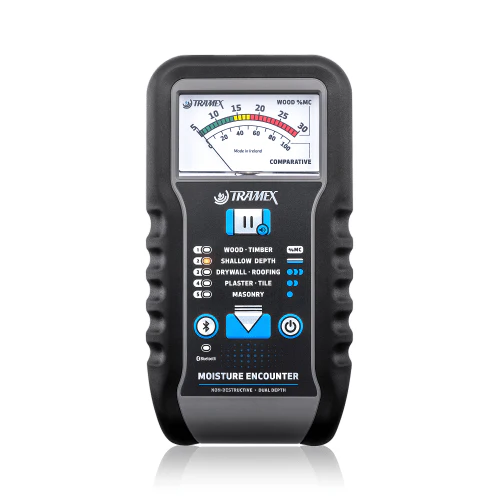
Surface water follows the slope of the ground, and on a sloping Gold Coast block that can be straight under the floor, where it dries slowly. The inspection records what was observed on the day: damp or ponded ground, moisture readings to bearers, joists and the underside of flooring, and staining or decay to the timber. A subfloor changes with every wet season, which is a good reason to book an annual building and pest inspection rather than rely on the pre-purchase report alone.
What does the report actually say about surface water drainage and stormwater disposal?
It records what was observed on the day, in plain condition wording. It does not test underground drains (a licensed Plumber or Drainer does that) or assess flood risk (ask your conveyancer about council flood mapping). Where ground or paving directs water towards the building, the report records evidence of inadequate surface water drainage observed adjacent to the dwelling, with a photo. A downpipe discharging at the base of a wall instead of to a stormwater point, or an air-conditioner condensate line dripping against the slab, is recorded the same way.
- On the timber pest side, poor drainage is recorded as a conducive condition, not a termite finding: the ground favours termites, it does not mean they are present.
- Elevated moisture recorded near a drainage problem is noted as a condition conducive to structural damage and timber pest infestation, with further investigation by a suitably licensed and insured Plumber or Drainer and, where relevant, a Timber Pest Inspector.
- A retaining wall that is leaning, moving or weeping water through its face, or cracking to masonry, a slab or a load-bearing wall, is referred to a Structural Engineer for further assessment, with a caution not to add load to the wall until assessed.
A combined building and pest inspection records site drainage findings as part of every report. Call 0431 114 815 to book — the fixed price is confirmed before you book.
If you are buying, Gold Coast building inspections with CYTE include a timber pest inspection in the same visit, and what we observe in the accessible areas is set out in a written report the same day.